Teen Therapy in Denton, Tx.
Something is going on with your kid.
You know them.
And lately, something is different.
They're angry about everything. Every question gets an eye roll, an “I don't know,” or a door closed in your face.
They're spending more time alone. Friends have changed. Grades have changed. They're anxious about things that never seemed to bother them before. They're putting enormous pressure on themselves. Or they've stopped seeming to care about much of anything.
Sometimes you see the kid you know.
Sometimes you have absolutely no idea who you're dealing with.
You've tried asking what's wrong.
Nothing.
You've tried giving them space.
Now you're wondering if you've given them too much.
You've tried talking, reasoning, checking in, backing off, pushing a little harder.
And you're here because something tells you they may need more help than you know how to give.
There may be more going on than they're telling you.
Teenagers don't always show distress in ways adults recognize.
Sometimes anxiety looks like anger.
Overwhelm can look like “I don't care.”
Fear of failing can look like refusing to try.
Feeling exposed or ashamed can look like defensiveness.
And sometimes silence really does mean: I don't know how to explain this to you.
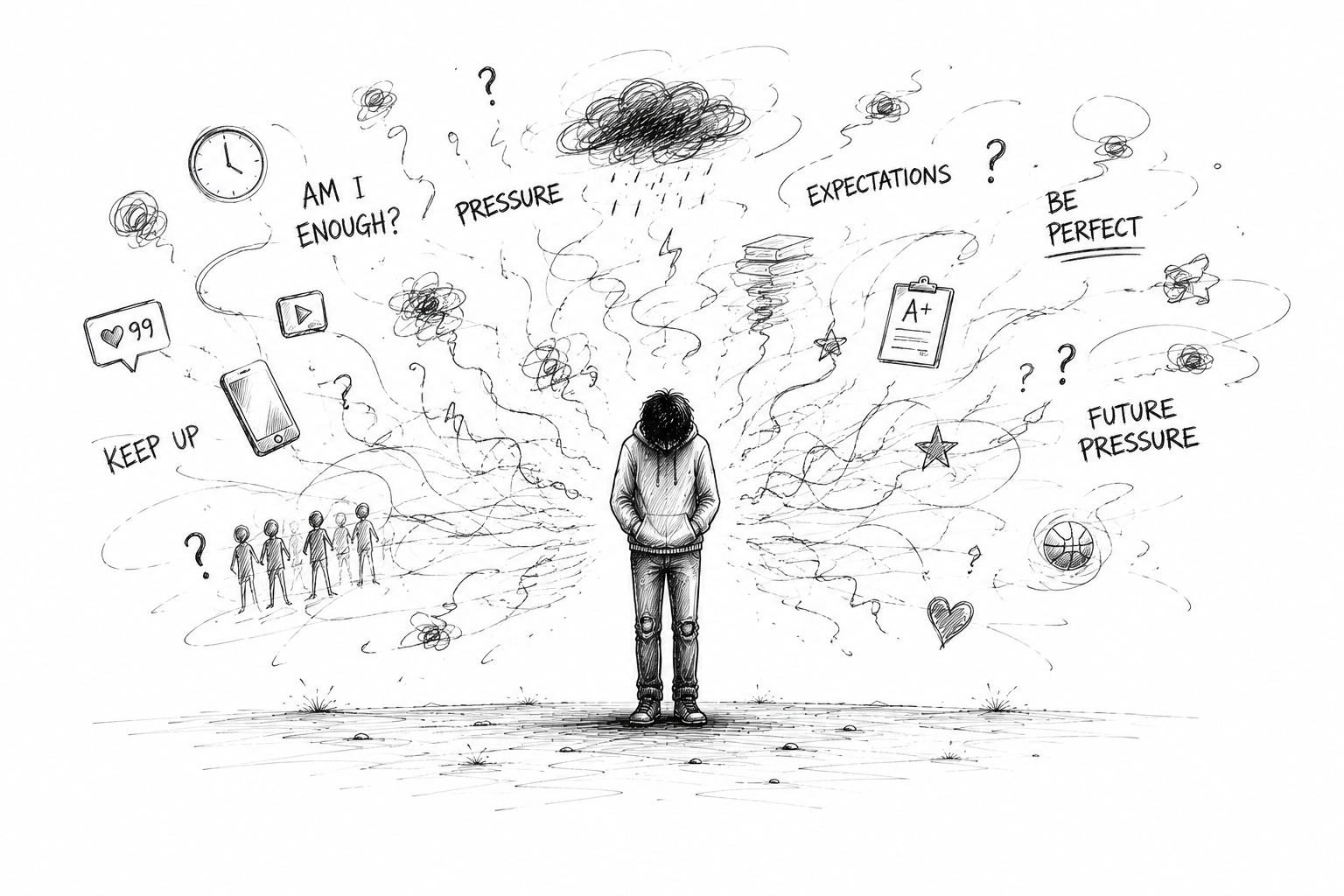
Your teenager is dealing with school, friendships, relationships, expectations, social media, their body, their future, and the very normal work of figuring out who they are and where they fit.
There can be a lot happening inside a person who answers your concerned parental inquiry with:
“I'm fine.”
You wanted to do it differently.
Maybe your own teenage years weren't easy.
Your parents didn't notice when you were struggling. Or they noticed and didn't know what to do. Maybe feelings weren't talked about in your house. You learned to handle things yourself because there wasn't really another option.
So when you became a parent, you made some promises to yourself.
I'll listen. I'll be there. My kid will know they can come to me. I'll do this differently.
And you have.
Which can make it especially hard when your teenager is struggling anyway.
You wonder what you missed. Whether you're doing too much or not enough. Whether you should push or back off.
And somewhere underneath all of that may be a fear you don't say out loud:
What if I'm failing them too?
Your teenager struggling doesn't mean you've failed as a parent.
And being a good parent doesn't mean preventing every painful experience.
Friendships will hurt. They'll make mistakes. They'll fail. They'll get rejected. They'll have feelings you can't fix and problems you can't solve for them.
They need opportunities to fall and the skills to get back up.
Therapy can help them understand what they're experiencing, tolerate discomfort, solve problems, recover from mistakes, make thoughtful decisions, and build confidence in their ability to handle what comes next.
You don't have to protect them from life. You can help prepare them for it.
They have more information than ever. They still need guidance.
Your teenager can ask TikTok, Google, Reddit, YouTube, or AI almost anything.
Do I have ADHD?
Is this anxiety?
Am I depressed?
Is my family toxic?
Could I be autistic?
Is this trauma?
What does this mean about my sexuality or gender?
Sometimes finding language for what they're experiencing can be incredibly helpful.
But information isn't the same thing as understanding your kid.
A video doesn't know their history. An algorithm doesn't know their family. A checklist can't understand the context around what they're experiencing.
A therapist can help your teenager slow all of that information down, ask better questions, explore what fits and what doesn't, and better understand themselves.
The goal isn't to tell your teenager who they are. It's to help them become a thoughtful participant in figuring that out.
What if they don't want to come?
Your teenager may not be thrilled that you're reading this page.
They may insist nothing is wrong.
They may tell you therapy is stupid. That they don't need it. That you're the one who needs therapy. That they aren't talking to some stranger.
Fair enough.
Being told you need therapy can feel like being told there's something wrong with you. And having an adult make the appointment can feel like one more decision somebody else made about your life.
We don't expect instant trust.
Your teen gets to have opinions about therapy. They get to ask questions. They get to understand what stays private and when a therapist would need to involve a parent. And they get to decide whether they trust the person sitting across from them.
Our therapists work to build that relationship over time and give your teenager a place where they can talk honestly, ask questions, disagree, explore, and figure things out without performing for another adult.
Our job isn't to tell your teenager who to be. It's to help them understand themselves and learn how to navigate what's in front of them.
Help them learn how to handle the big stuff.
Teenage feelings can be enormous.
Friendships matter. Rejection hurts. Academic pressure is real. First relationships can feel consuming. Family conflict matters. Figuring out where you belong can be complicated. The future can feel exciting one minute and terrifying the next.
Therapy isn't about convincing your teenager that none of it is a big deal.
It's helping them understand what's happening, process what has happened, recognize patterns, build skills, and learn how to make decisions when emotions are loud.
They can learn to recognize what they need. Ask for help. Tolerate discomfort. Recover from mistakes. Understand their brain. Figure out what belongs to them and what they're absorbing from everyone around them.
The feelings can still be big.
They just don't have to run everything.
If you're the teenager reading this...
You may be here because you asked for help.
You may be here because somebody else thinks you need it.
Either way, you get to have questions about therapy and opinions about what you want help with.
You don't have to know what's wrong. You don't have to know what you're supposed to talk about. And you don't have to have yourself figured out before you show up.
We can start there.