Counseling for children 3+ struggling with anxiety, depression, behavior, or trauma.
Play Therapy in Denton, Tx.
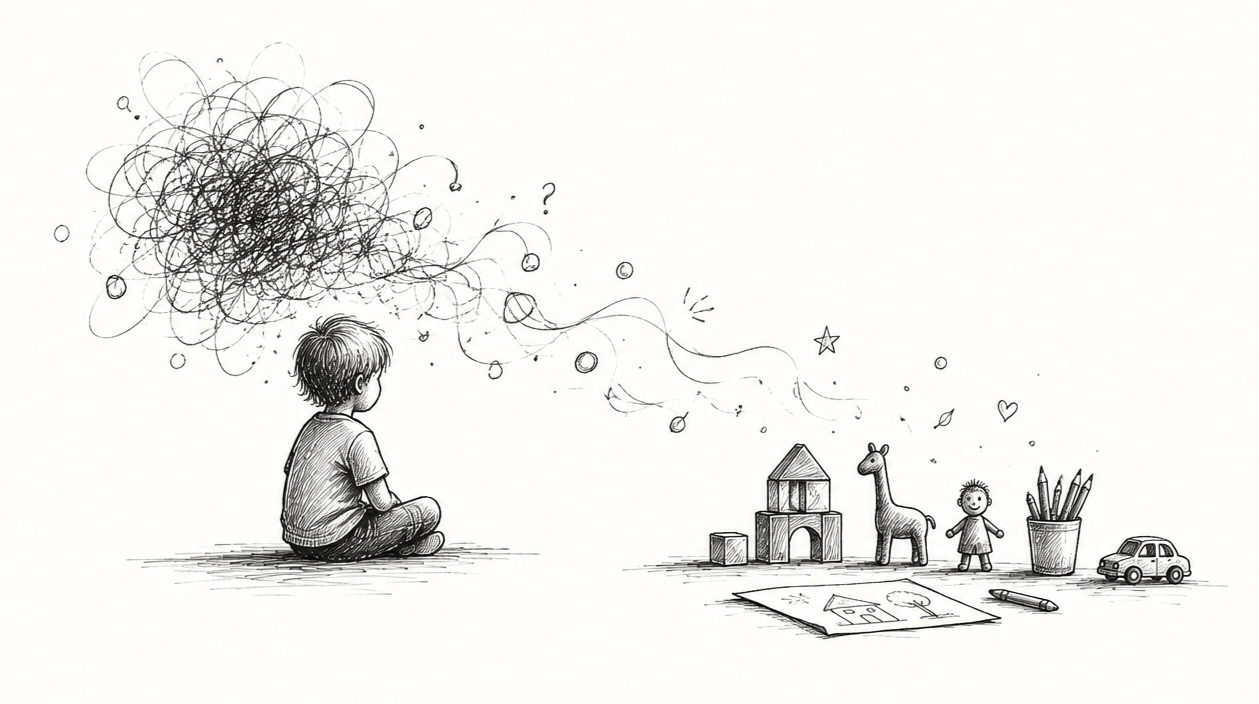
You know something is going on. They just can't tell you what.
Something has changed.
They're having meltdowns over things that never used to be a problem. They're suddenly afraid to be away from you. They're angry. Clingy. Having trouble sleeping. Getting in trouble at school. Complaining that their stomach hurts.
Or they've gotten quieter.
You've asked what's wrong.
“I don't know.”
And they may genuinely not know.
Young children experience anxiety, grief, family changes, trauma, fear, anger and loss without always having the language or developmental ability to explain what is happening inside them.
That's where play comes in.
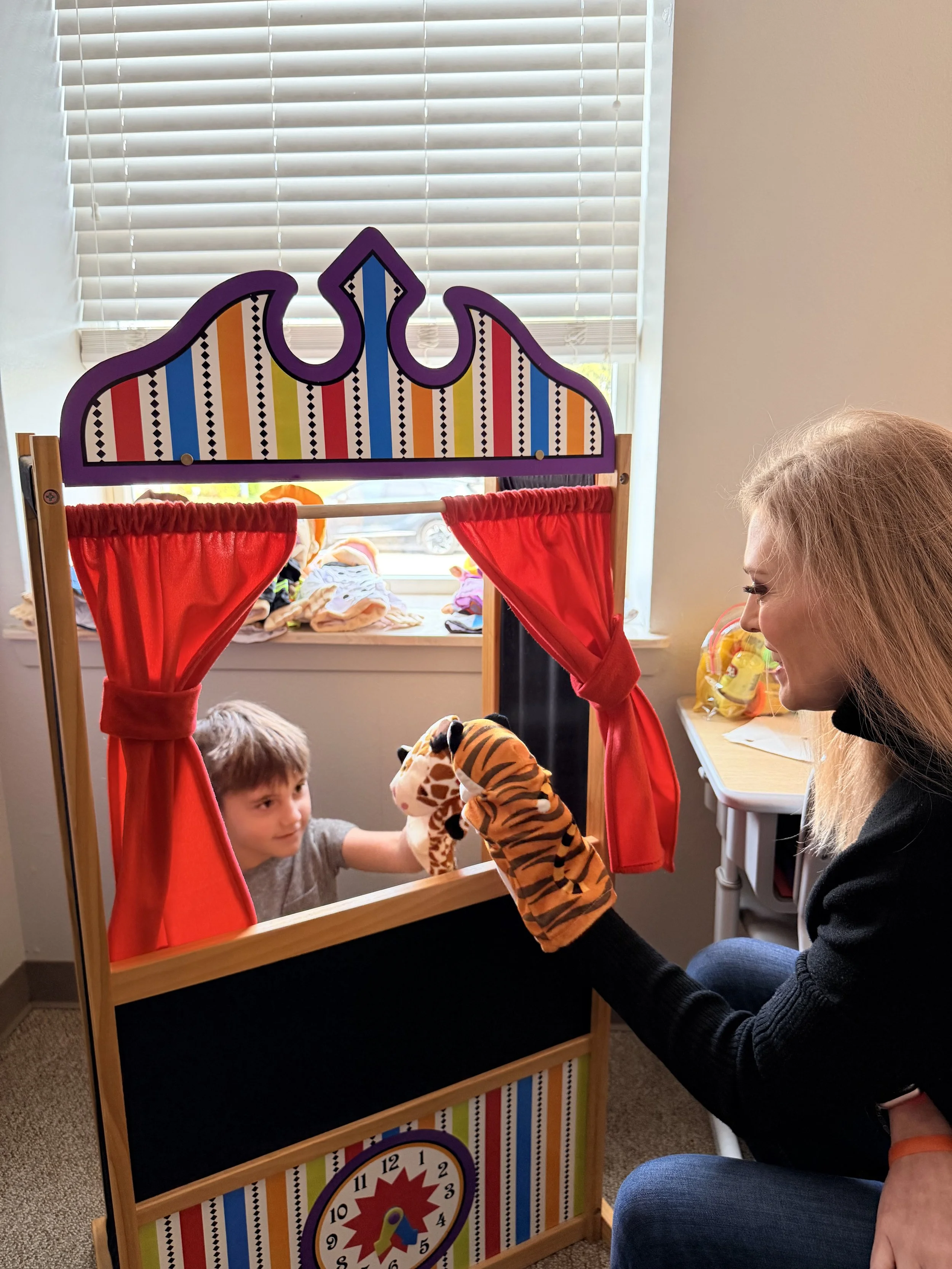
Play gives us another way in.
Adults usually come to therapy and talk.
Children often show us.
A child can use a family of dolls to show relationships they can't describe. A sand tray can hold something they don't have words for. A story can give distance to something that feels too close. The way a child repeatedly plays out a situation can give a trained therapist information about what they're trying to understand or work through.
The toys aren't there just to keep your child entertained.
They're tools for communication.
What can play therapy help with?
Parents often bring children to play therapy because they're seeing:
Anxiety, fears or separation difficulties
Frequent meltdowns, anger or emotional outbursts
Changes in behavior at home or school
Withdrawal or sadness
Difficulty handling frustration or disappointment
Grief and loss
Divorce, moves or other family transitions
Trauma or stressful experiences
Changes they can't quite explain
Behavior is often the part you can see. Play can help us understand what's happening underneath it.
So... are they really just going to play?
Yes.
But there is a lot more happening in the room than it may look like from the outside.
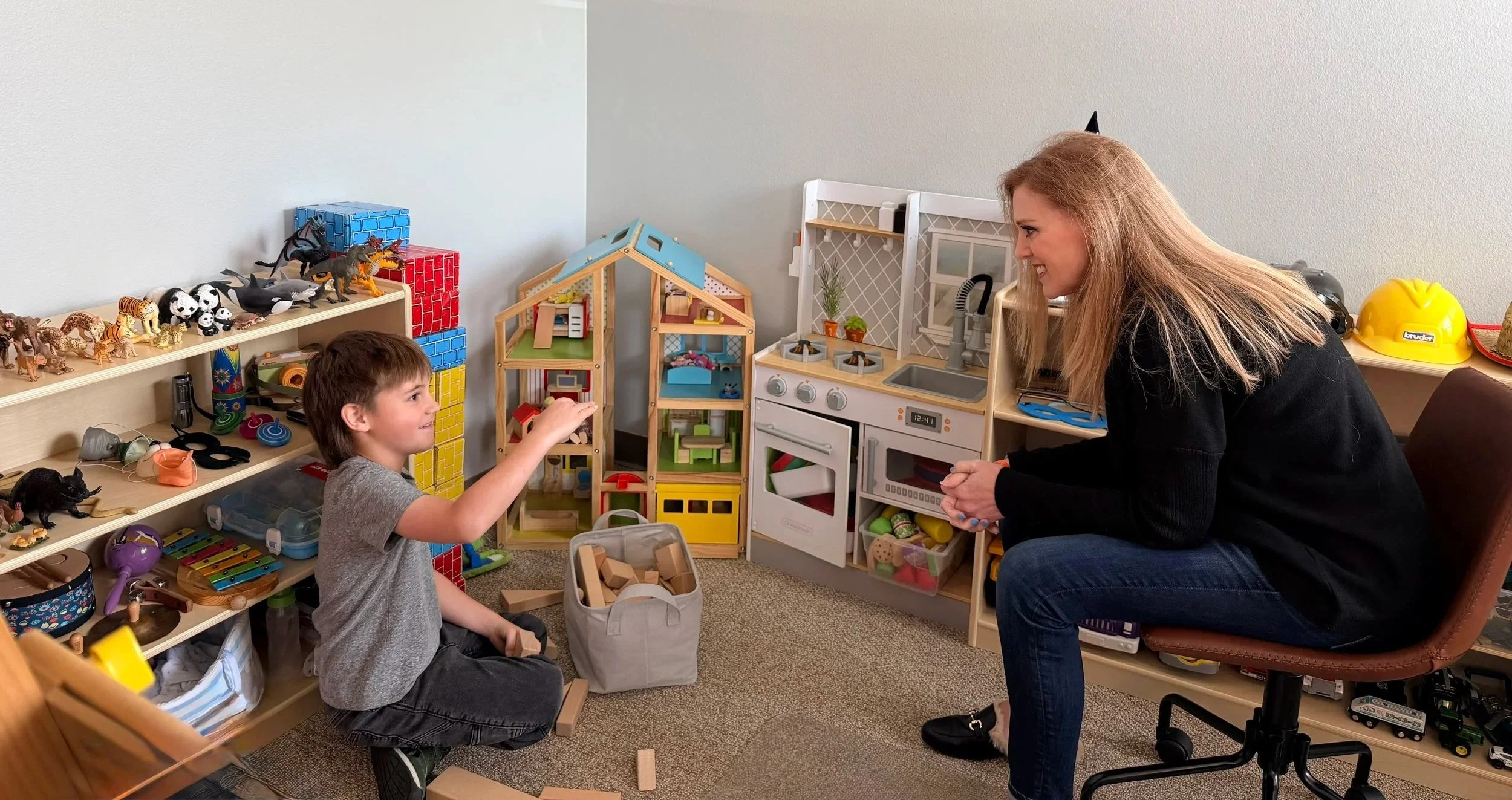
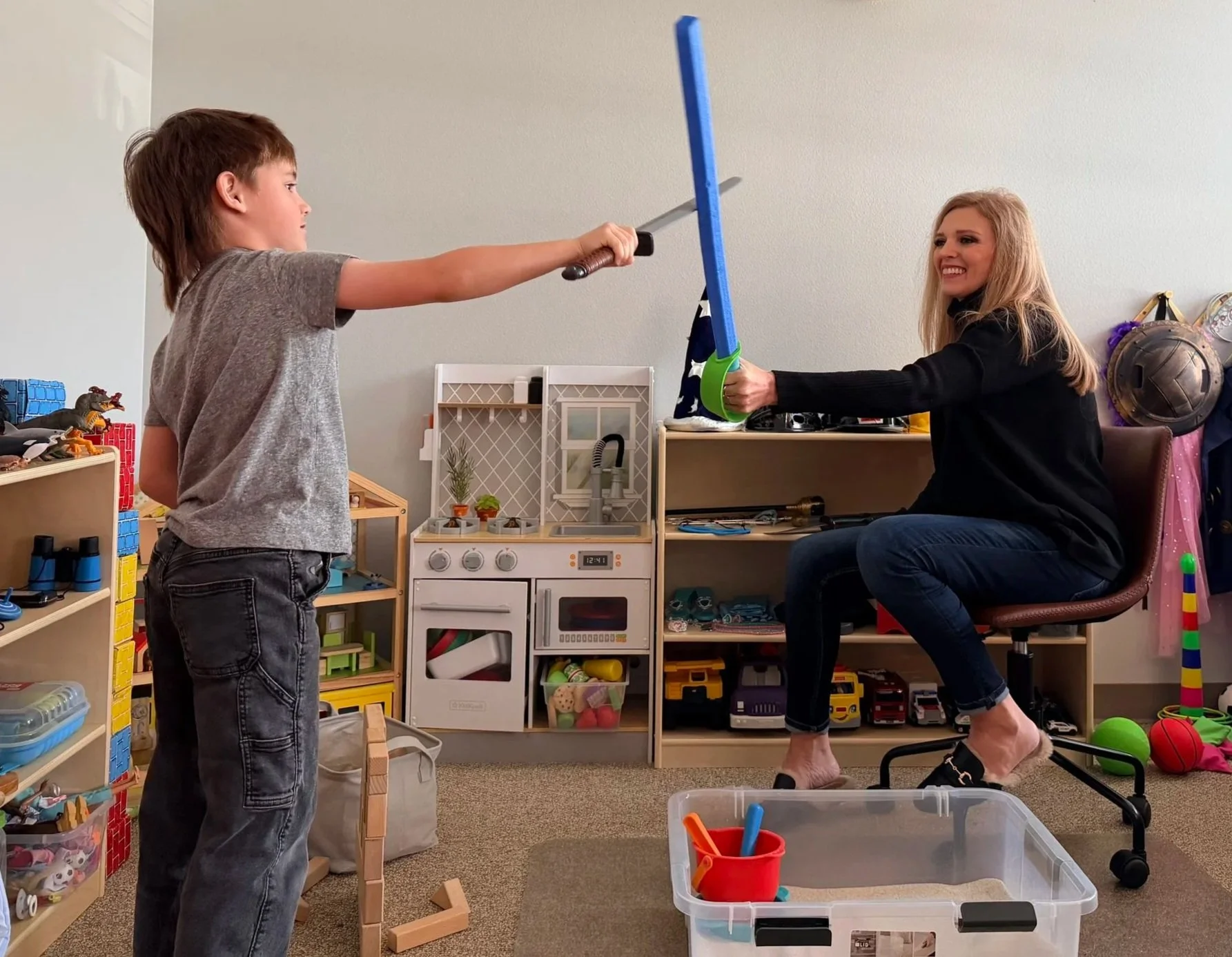
Your child works one-on-one with a therapist in a playroom intentionally designed for therapeutic work. Depending on the child, that might involve toys and figures, imaginative play, storytelling, art, games or a sand tray.
The therapist isn't sitting across from your six-year-old asking, “And how did that make you feel?” for 50 minutes.
They're paying attention to what your child communicates through the play, the patterns that emerge, the emotions that show up, and how your child responds when things become difficult.
Over time, play can help children process experiences, understand emotions, practice different responses, build confidence and develop more capacity to handle what's happening in their world.
It looks like play because that's the work.
You're part of this too.
You know your child better than we do.
What you're seeing at home matters. Changes you've noticed matter. What happened before therapy matters.
Your child's therapist may work with you to understand what's happening outside the therapy room and help you think about how to respond at home.
At the same time, your child needs enough privacy and space for the therapy room to become their place.
We'll help you understand what that balance looks like.
And progress doesn't always happen in a straight line. Trust takes time. Processing takes time. Sometimes behavior changes before a child can explain what's different.
We're paying attention to the whole picture, not just what happens during one hour of play.
You know your kid. Trust your gut.
You know their normal.
You know when they're tired, when they're pushing limits, when they're having a bad day, and when something feels different.
You may not be able to put your finger on exactly what has changed. You may wonder if you're overreacting. Someone else may tell you it's just a phase.
But you're paying attention for a reason.
If something feels off, it's worth getting curious about.
You don't need to have a diagnosis or an explanation. Start with what you're seeing. We'll help you figure out what might be underneath it and what your child needs.